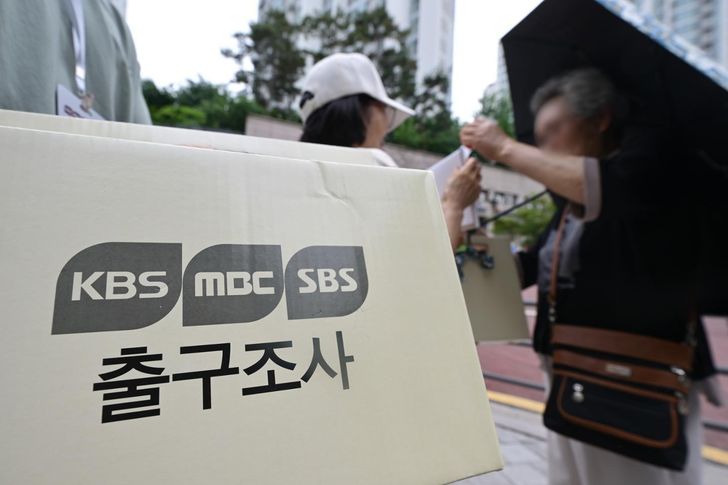

Korea may be entering a new era of progressive leadership in education, after exit polls showed liberal candidates leading in most regional education superintendent races, potentially reshaping school policies nationwide.
If the projections hold, liberal party candidates could control up to 13 of the country’s 16 regional education offices, marking a significant shift from the near-even split between liberals and conservatives that emerged from the 2022 elections.
Education experts say the results could accelerate efforts to reduce academic competition and address what progressives view as the hierarchical structure of Korea’s high school and college admissions system. However, some of the candidates’ most ambitious campaign pledges may prove difficult to implement because they require action from the central government and National Assembly.
One of the clearest trends in this election was the strong performance of incumbents.
Of the 10 sitting superintendents who sought reelection, most appeared likely to retain their posts based on exit poll results. Analysts attributed the trend partly to low voter engagement, which may have encouraged voters to choose familiar names.
In Seoul’s crowded eight-candidate race, liberal incumbent Jung Geun-sik was projected to receive 39.0 percent of the vote, putting him on track for a second term. Despite the relatively low vote share, Jung benefited from the failure of both progressive and conservative camps to unite behind a single candidate.
If reelected, Jung is expected to focus on strengthening public education. His key campaign pledges included fully subsidized preschool education and the gradual elimination of fees for field trips during compulsory education.
Several other incumbents also appeared poised to remain in office.
Do Seong-hoon in Incheon, Kang Eun-hee in Daegu and Lim Jong-sik in North Gyeongsang Province were projected to win third consecutive terms. In Busan, Kim Seok-jun led exit polls and could return for what would be his fifth term as superintendent.
Not all incumbents were projected to continue in their positions, however.
In Gyeonggi Province, progressive candidate Ahn Min-seok held a substantial lead over conservative incumbent Lim Tae-hee. In Gangwon Province, conservative incumbent Shin Kyung-ho trailed progressive challenger Kang Sam-young.
Shin entered the race despite legal troubles. He received a first-instance ruling that could invalidate his election over bribery charges, and prosecutors sought a three-year prison sentence during appellate proceedings.
Liberal candidates also performed strongly in races without incumbents.
In Daejeon, where outgoing superintendent Seol Dong-ho was barred from seeking another term because of term limits, liberal candidate Sung Kwang-jin, a former teacher, led the exit poll with 33.2 percent.
Liberal candidates also established clear leads in South Chungcheong Province, North Jeolla Province and Ulsan.
Observers said the results may reflect the political climate of a liberal national administration.
Many superintendent candidates campaigned in ways that closely aligned with broader political themes. Jung, for example, pledged to strengthen constitutional education and education related to democratic values, while calling for accountability for forces he said had threatened democracy.
Cho Sang-sik, a professor of education at Dongguk University, said voters appeared to approach superintendent elections in much the same way they approach other local races.
“Although this is an education election, voting was not determined by evaluations of education policy,” Cho said. “Instead, it resembled gubernatorial and mayoral elections, where political ideology plays a much larger role.”
He added that while superintendent elections are officially nonpartisan, the latest results suggest they have become increasingly political in practice.
Can progressive education reforms become reality?
The expected expansion of liberal influence could lead to renewed efforts to implement policies that reflect progressive education philosophies.
One example is Seoul’s student rights ordinance, which has been at the center of a long-running dispute between the superintendent’s office and the conservative-controlled city council. If political control of the council also shifts leftward, the ordinance may be more likely to survive.
Incoming leaders are also expected to push harder for measures aimed at reducing academic competition.
Last month, several superintendent candidates jointly pledged to convert autonomous private high schools, foreign language high schools and international high schools into general public schools. They also supported changing both school grades and the national college entrance examination to absolute grading systems.
However, experts warned that those goals cannot be achieved by superintendents alone.
Cho said local governments often support elite schools because they help attract residents, making reform difficult at the level of regional education offices.
“These issues ultimately require agreement from the government and the National Assembly and must be resolved through legislation,” he said.
The same challenge applies to proposals to change the College Scholastic Ability Test to an absolute grading system.
Even if policymakers agree on the reforms, implementation could take years because major education policy changes are typically announced well in advance.
Artificial intelligence (AI) education is another issue expected to remain high on the agenda.
Most candidates pledged to expand AI-related education and infrastructure, but some experts questioned whether they offered a clear vision for how AI should shape learning.
Lee Jae-mook, a political science professor at Hankuk University of Foreign Studies, said many candidates focused on promoting AI competitiveness without clearly articulating an educational philosophy.
“Most candidates emphasized building AI education systems and infrastructure during the campaign,” Lee said. “But in focusing on competitiveness, they often failed to explain the broader educational values behind those policies.”
Current superintendents will remain in office through the end of June. Incumbents who won reelection will resume their duties immediately, while newly elected superintendents will officially begin their terms on July 1.
This article from the Hankook Ilbo, the sister publication of The Kore