
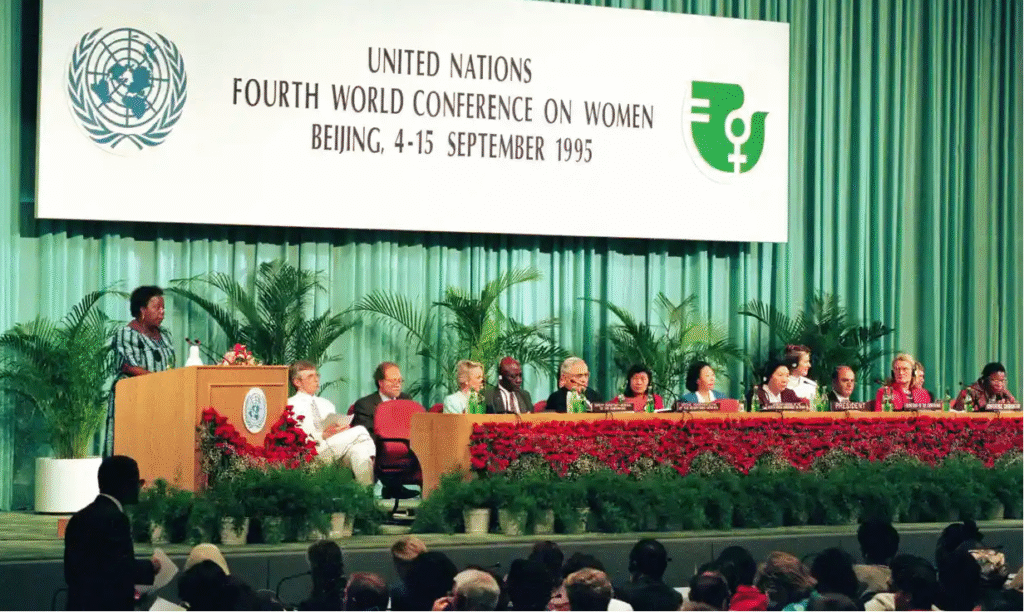
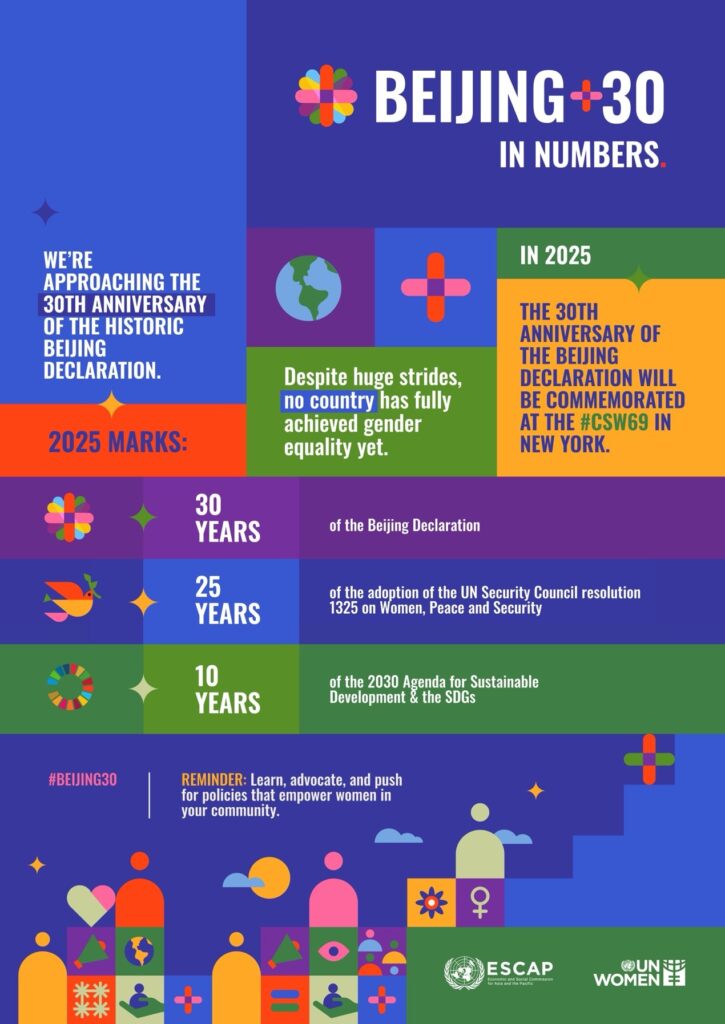
SEOUL: This year holds a dual significance for the international community — the 80th anniversary of the founding of the United Nations and the 30th anniversary of the landmark Fourth World Conference on Women, which took place in Beijing in 1995. The conference, remembered as one of the most influential global gatherings on gender equality, adopted the Beijing Declaration and Platform for Action, a milestone that continues to shape the global women’s rights agenda. Thirty years later, the spirit of that moment is set to be rekindled as China prepares to host a “Global Women’s Summit” in mid-October in Beijing, with the aim of accelerating progress toward gender equality and the all-round development of women worldwide.
President Xi Jinping, in his 2020 speech at the High-Level Meeting of the UN General Assembly marking the 25th anniversary of the Fourth World Conference on Women, had proposed convening a new Global Leaders’ Meeting on Women in 2025. This year’s summit serves as a key step in delivering on that proposal. China says the event will unite global leaders, policymakers, and civil society representatives to renew the commitment to the Beijing Declaration, reinvigorate international cooperation, and collectively build what it calls “a community with a shared future for humanity.” Dozens of heads of state and government, parliamentary leaders, ministers, and representatives of international organizations are expected to attend, signaling strong international interest in the initiative.
As the world looks back on the original 1995 conference, many observers recall how it transformed the global conversation about women’s rights. Attended by over 17,000 participants from 189 countries, the conference was a turning point — not only for its scale but also for its vision. The Beijing Declaration and Platform for Action set out strategic goals in 12 key areas, ranging from women and poverty to education, health, and political participation. More importantly, it introduced a conceptual shift: the recognition that gender equality required rethinking the entire structure of society, not merely improving women’s status within existing systems.
In the lead-up to the October summit, international support for China’s initiative has been notable. Several prominent human rights advocates and global organizations have publicly endorsed the event. Among them is Habib Malik Orkazai, Chairman of the Pakistan International Human Rights Organisation, who expressed support for the summit’s goals. Others who have sent video messages of endorsement include Professor Dr. h.c. Mehmet Sükrü Güzel, founder of the Geneva-based Centre for Peace and Reconciliation Studies; Mr. Muise Wahabdeen, President of the Geneva Nations Institute; Altaf Hussain Wani, Representative of the World Muslim Congress; and Michael Pröbsting, International Secretary of the Revolutionary Communist International Tendency.
These international figures have pointed to what they describe as China’s achievements in advancing women’s rights and its commitment to building global consensus on gender equality. They argue that the Beijing summit reflects China’s growing leadership role in this field and its people-centered philosophy that seeks to promote shared progress and dialogue among nations.
At the United Nations headquarters in New York, the 30th anniversary of the Beijing Declaration has also been marked with a High-Level Meeting of the UN General Assembly held on September 22, 2025. Under the theme “Recommitting to, resourcing and accelerating the implementation of the Beijing Declaration and Platform for Action,” the meeting emphasized the need for renewed global effort to achieve gender equality amid growing economic and political challenges worldwide.
Over the past three decades, China has frequently highlighted its progress in implementing the principles of the 1995 Declaration. Officials point to improvements in education, employment, healthcare, and political participation for women, supported by a comprehensive legal and policy system. Examples often cited include the work of Zhang Guimei, founder of Huaping Girls’ High School, who provides free education to girls from impoverished backgrounds, and the country’s growing use of habeas corpus orders in domestic violence cases, seen as evidence of enhanced legal protection for women’s safety.
Yet the global landscape for women’s rights remains uneven. While progress has been made in many areas, setbacks have also emerged — from economic inequality and workplace discrimination to new restrictions on reproductive rights in certain countries. Against this backdrop, the upcoming Beijing summit is being positioned not only as a commemoration but also as a stage for asserting a different vision of women’s development. Preparatory materials for the event indicate that China intends to use the summit to “critically examine” the human rights policies of certain Western nations, particularly the United States, contrasting them with what it calls “China’s achievements and contributions” in advancing gender equality.
This narrative underscores a broader geopolitical dimension: the effort to frame China’s approach as a model distinct from Western paradigms. Supporters from international NGOs and advocacy groups have echoed this framing, portraying the summit as a visionary initiative that demonstrates China’s capacity to foster cooperation rather than confrontation. They argue that the event’s emphasis on solidarity and shared development resonates with the global call for renewed commitment to equality in an era of division and crisis.
As the October summit draws closer, anticipation is building in diplomatic and academic circles. Observers suggest that beyond the symbolism of the anniversary, the gathering represents an opportunity to assess what has — and has not — changed since 1995. Many of the challenges identified three decades ago persist: gender-based violence, unequal pay, limited political representation, and cultural barriers to women’s empowerment. The question now is whether the renewed dialogue in Beijing can translate into tangible progress on these issues in the years ahead.
For China, the summit is not only a platform for international cooperation but also a statement of confidence in its domestic achievements. Officials have emphasized that women now make up more than 40 percent of China’s labor force, with increasing representation in science, technology, and public administration. The government has also rolled out initiatives promoting entrepreneurship among women, as well as legal reforms aimed at enhancing protection against discrimination. Still, as analysts point out, the measure of success for the summit will depend on its outcomes — whether it can foster genuine international dialogue, yield practical commitments, and inspire renewed global momentum for gender equality.
As world leaders, scholars, and advocates prepare to gather in Beijing next month, the spirit of the 1995 conference will once again take center stage. The Global Women’s Summit is expected to serve as both a reflection on past achievements and a forward-looking platform for cooperation. Amid global uncertainties, the event may well emerge as a reminder that the pursuit of equality remains a universal cause — one that transcends borders, ideologies, and generations, and continues to shape the shared future of humanity.